

Transaction Sets: The Key to Organised Bookkeeping 📂
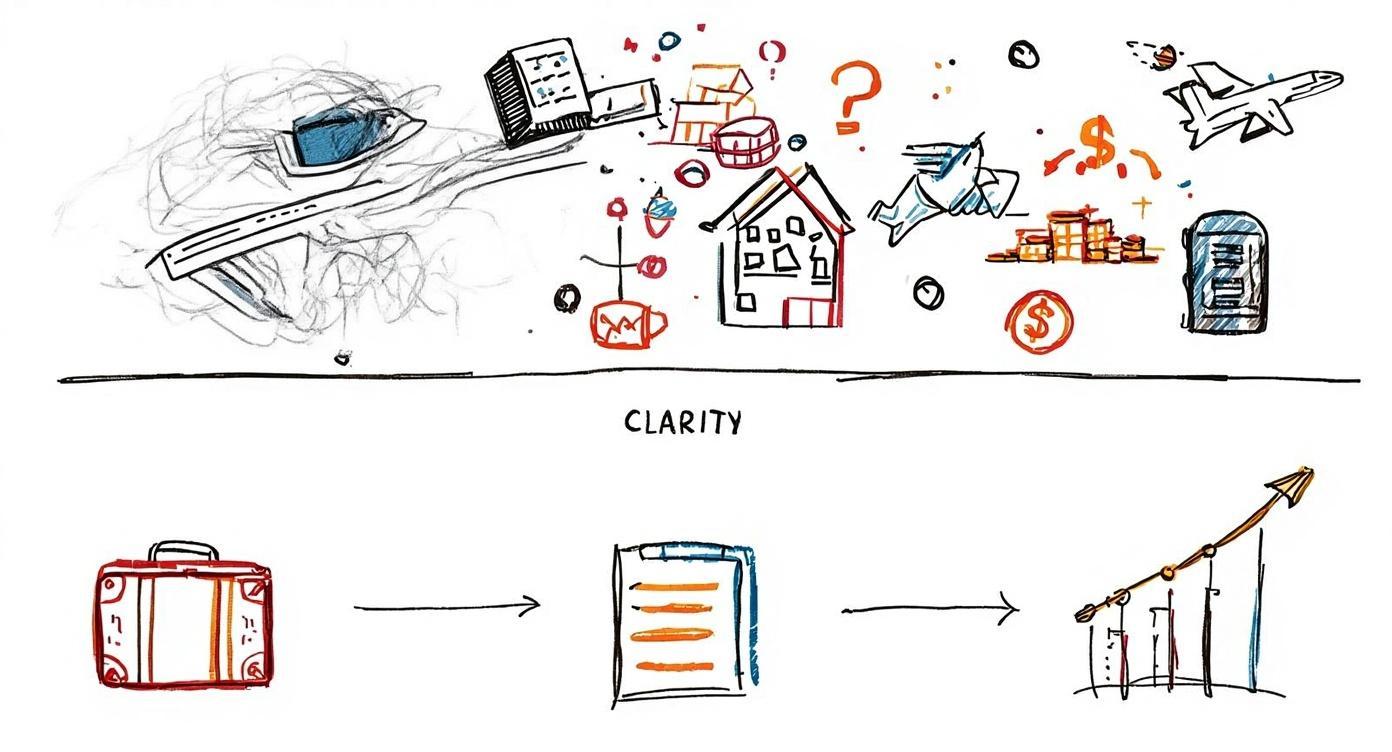
In modern business, financial data doesn’t arrive in a neat, orderly fashion. It’s a chaotic flood 🌪️ of emails, thermal paper receipts, formal invoices, and contractual clauses. The single most important skill for taming this chaos is mastering the art of the transaction sets 🧩. This is more than just paperwork; it’s about creating a complete, logical story for every single financial event before it ever touches your accounting software. A well-assembled transaction set is the foundation of accurate reporting, stress-free audits, and true financial clarity.
This guide will walk you through the process, from gathering disparate documents to assembling them into audit-proof transaction sets ready for a system like Bukku.
Step 1: The Document Hunt — Gathering Your Raw Materials 🕵️♀️
A transaction’s story often begins scattered across multiple formats and locations. The first step is to become a diligent collector, understanding that every piece of paper or digital file is potential evidence. Your sources will typically include:
- 📧 Digital Inflows: Invoices and statements arriving as PDF attachments in supplier emails are common. You’ll also have digital receipts from e-wallet payments or online portals.
- 🧾 Physical Documents: This includes standard A4 or letter-sized invoices, but also the notoriously flimsy, simplified POS system bills from retail purchases. These thermal receipts fade quickly and should be scanned or photographed immediately.
- 🤝 Operational & Contractual Records: A complete transaction set isn’t always just an invoice and a payment slip. It can include supporting documents born from internal procedures, such as a Delivery Order (DO) or a Goods Received Note (GRN) that verifies the fulfillment of an order. Crucially, it also includes legally binding contracts and agreements, which often contain clauses dictating financial transactions.
Step 2: Analysis & Assembly — Building the Perfect Transaction Sets 🧱
Once gathered, the real work begins: analysing and grouping these documents. The golden rule is one transaction sets for each distinct accounting entry. A common mistake is bundling documents that represent separate steps of a process into a single entry.
Let’s illustrate with a classic B2B purchase:
- Transaction Sets #1: The Credit Purchase
- Core Document: The supplier’s Purchase Invoice.
- The Story: This document creates a liability. Your company has received goods or services and now owes money.
- In Bukku: This is entered as a ‘Credit Purchase’ or ‘Bill’, debiting an expense/asset and crediting Accounts Payable.
- Transaction Sets #2: The Payment
- Core Documents: A formal Payment Voucher and the corresponding Bank Transfer Slip or credit card statement.
- The Story: This set proves the liability has been settled.
- In Bukku: This is entered as a ‘Purchase Payment’, debiting Accounts Payable and crediting the Bank/Cash account.
To correctly assemble your sets, ask these critical questions 🤔:
- 💳 Is it Cash or Credit? A simplified POS receipt stating “CASH SALES” is a cash transaction. An invoice with terms like “NET 30” is a credit transaction.
- 🏢 Whose Name Is On It? With Malaysia’s e-invoicing mandate, it’s more important than ever that invoices bear your company’s name, address, and TIN. A generic “cash” receipt may be rejected for tax purposes.
- 💵 How Was It Paid? The payment method dictates the accounting entry, whether from the company bank, on behalf by a director, via e-wallet, or from petty cash.
Digital Craftsmanship: Splitting & Merging Files ✂️🔗
Assembling the perfect digital file is a key part of this step. You must manipulate your PDFs to match your transaction sets.
- Splitting: Imagine a supplier sends one 5-page PDF containing three different invoices and two credit notes. These are five separate transactions. The PDF must be split into five individual files before being processed.
- Combining: Conversely, you might have a Purchase Order sent via email, an invoice as a PDF, and a photo of the signed Delivery Order. These three items support one transaction. They should be combined into a single, multi-page PDF to create one complete, self-contained file for easy attachment and auditing.
The Supporting Cast: Non-Accounting Documents 📎
Many documents are vital for business operations but do not have a direct accounting entry. These include Quotations, Purchase Orders (POs), and Delivery Orders (DOs).
- Their Role: These documents provide context and are part of a complete audit trail, showing the entire lifecycle of a purchase.
- The Process: While we do not process them into the accounting system as a transaction (the invoice is the document that triggers the accounting entry), we will scan and file them. Best practice is to attach them to the corresponding invoice transaction within your software, ensuring a complete and easily searchable record.
Step 3: Navigating Nuances and Special Cases 🧭
Business is full of variations. Your transaction sets must adapt:
- 🔄 Recurring Billing: For a monthly software subscription, the transaction set is simply the invoice received.
- 🌍 Foreign Currency Transactions: An expense on a director’s foreign currency card requires two documents: the original invoice (e.g., in USD) and the local credit card statement showing the final Ringgit Malaysia (MYR) amount and transaction date.
- 🗓️ Periodic & Cross-Period Billing: For daily deliveries with one monthly invoice, the transaction set is the monthly invoice, supported by the collection of DOs. For bills that cross accounting periods (e.g., a telco bill from 13th Oct to 12th Nov), your bookkeeper uses the invoice to create an accrual entry to allocate the expense correctly between months.
- 💰 Advance Payments & Deferred Revenue: A deposit paid for a future event requires the Sales Order/Agreement and the payment receipt. This creates a liability (Deferred Revenue), not a sale. The revenue is recognised later when the service is delivered.
- 📊 Multi-Transaction Summaries: Documents like bank statements, supplier Statements of Account (SOAs), or payment gateway summaries (e.g., Stripe) are verification tools, not source documents for individual entries. You cannot simply book the total from a statement. Each line item (e.g., a payment to a specific supplier on the bank statement) must be matched to its own individual transaction set (the original invoice and payment voucher). The statement’s role is for reconciliation to ensure nothing was missed.
By meticulously identifying, grouping, and digitally assembling your files, you create unambiguous transaction sets. This discipline transforms a chaotic pile of paper into a clear, accurate ✅, and powerful tool for financial management. It’s the bedrock of reliable reporting and a non-negotiable process in today’s data-driven world 🚀.



Trackbacks/Pingbacks